
Every safety shoe box carries a string of codes: S1P SRC, S3, S3S, HRO. Most site supervisors and purchasers just ask for “safety boots, size 42”. That works until a worker steps on a nail, or a shoe goes soft after two weeks of rain. This guide explains what the ratings mean and which one fits the job, so you buy the right protection the first time.
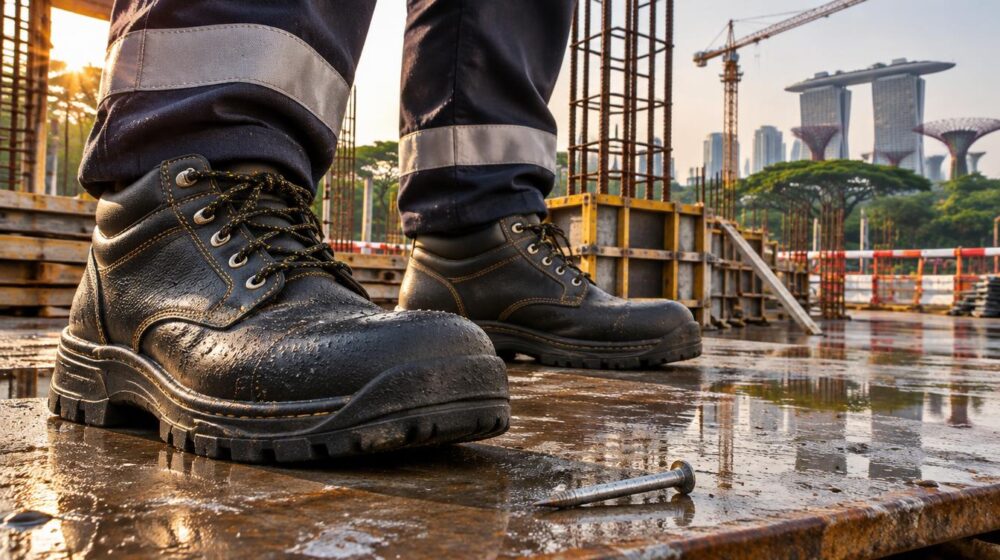
The standard behind the codes: EN ISO 20345
Most safety footwear sold in Singapore is tested to EN ISO 20345, the international standard for safety shoes with a protective toe cap. Every “S” class shoe has a toe cap rated for a 200 joule impact and a 15 kN squeeze. The class letters then add extra protection on top of that base.
The classes in plain English
| Class | What it adds | Good for |
|---|---|---|
| SB | Toe cap only (basic) | Light indoor work |
| S1 | SB + closed heel, antistatic, shock-absorbing heel | Dry warehouses, workshops |
| S1P | S1 + puncture-resistant midsole | Dry sites with nails and debris |
| S2 | S1 + water-resistant upper | Light wet work, no puncture risk |
| S3 | S2 + puncture-resistant midsole + cleated sole | Outdoor construction, wet sites |
| S6 / S7 | S2 / S3 with the whole shoe waterproof (WR) | Standing water, marine decks, wash-down areas |
What changed in EN ISO 20345:2022
The standard was updated in 2022, so you will now see both old and new labels on shelves. The changes that matter to buyers:
- Puncture resistance is now split three ways. P means a steel midsole. Non-metal (textile) midsoles are now marked PL (tested with a 4.5 mm nail) or PS (tested with a thinner 3.0 mm nail, which is the tougher test). So you will see S1PL, S1PS, S3L and S3S.
- Slip ratings were simplified. The old SRA, SRB and SRC codes are gone. Basic slip resistance is now part of every class, and an extra SR mark means the shoe also passed a test on an oily ceramic floor.
- Fuel-oil resistance is now optional. Under the old standard S1 to S3 shoes included it. Now look for a separate FO mark if workers handle diesel, hydraulic oil or lubricants.
- Two new classes, S6 and S7, cover shoes that are waterproof all over, not just in the upper.
Shoes certified under the 2011 version are still safe and legal to wear. The new labels just describe the protection more precisely.
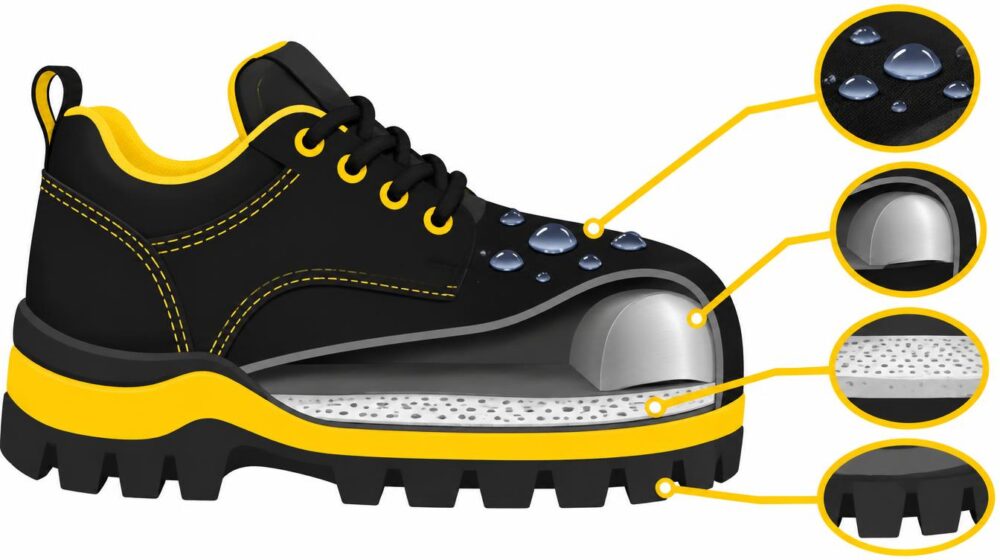
Steel or non-metal midsole?
- Steel midsole (P): stops the nail completely, lasts well and keeps the shoe affordable. It is stiffer and a little heavier. The standard choice for general construction and hardware-shop stock.
- Non-metal midsole (PL / PS): lighter, more flexible, doesn’t conduct cold or set off metal detectors. Better for workers who walk or climb ladders all day, and for sites with metal-detector checks.
Which rating for which job in Singapore
| Work | Minimum we suggest | Why |
|---|---|---|
| Construction and renovation | S1P, or S3 for outdoor and rainy-season work | Nails, rebar offcuts, tiles. Rain turns sites wet fast. |
| Marine, shipyard and offshore | S3 or S7, with SR and FO marks | Wet, oily steel decks and fuel exposure |
| M&E and building maintenance | S1P, plus an electrical-hazard rated shoe for live electrical work | Plant rooms, ceiling work, ladders |
| Warehouses and logistics | S1 or S1P | Pallets, forklifts, dry floors |
| Kitchens and food factories | S2 with the SR mark | Greasy, wet tiled floors |
Your site’s risk assessment and the main contractor’s PPE rules always come first. If the safety plan says S3, buy S3.
Where Nitti fits
Nitti is Singapore’s workhorse safety shoe: genuine leather uppers with steel toe caps and steel midsoles, built for dry, everyday site work. Many Nitti models are rated S1P with slip resistance. Check the label and certificate for the exact rating of the model you order. The range comes in low, mid and high cut, with lace, Velcro, zip and pull-on styles, in sizes 2 to 14. For a full walkthrough of the cuts, see our Nitti safety shoes guide.

- Nitti 21281 Low-Cut Lace: the best-seller for general sites
- Nitti 22781 Mid-Cut Slip-On: quick on and off, more ankle cover
- Nitti 23681 High-Cut Zipper: full ankle support for scaffolding and uneven ground
A buyer’s checklist
- Match the class to the site’s risk assessment, not the price.
- Check the label inside the tongue for the class, any extra marks (SR, FO, HRO, WR) and the standard year.
- Order by size run, not one size for everyone. Wrong-size shoes are the main reason workers stop wearing them.
- Replace shoes once the toe cap is exposed, the sole is worn smooth or the midsole has been pierced.
- For company and project orders, keep a size list per worker so repeat orders are quick.
Bulk and trade orders
A.C.T. Hardware is the largest Nitti wholesaler in Singapore. We supply contractors, marine suppliers and hardware shops by the carton, with deep stock in sizes 2 to 14. Send us your size list for a quotation: call +65 6255 3446, email enquiry@acthardware.com.sg, or add items to the quotation cart.